
Experience next generation digital storage with NFC Vault, where your data stays secure, accessible, and lightning fast.
Learn More →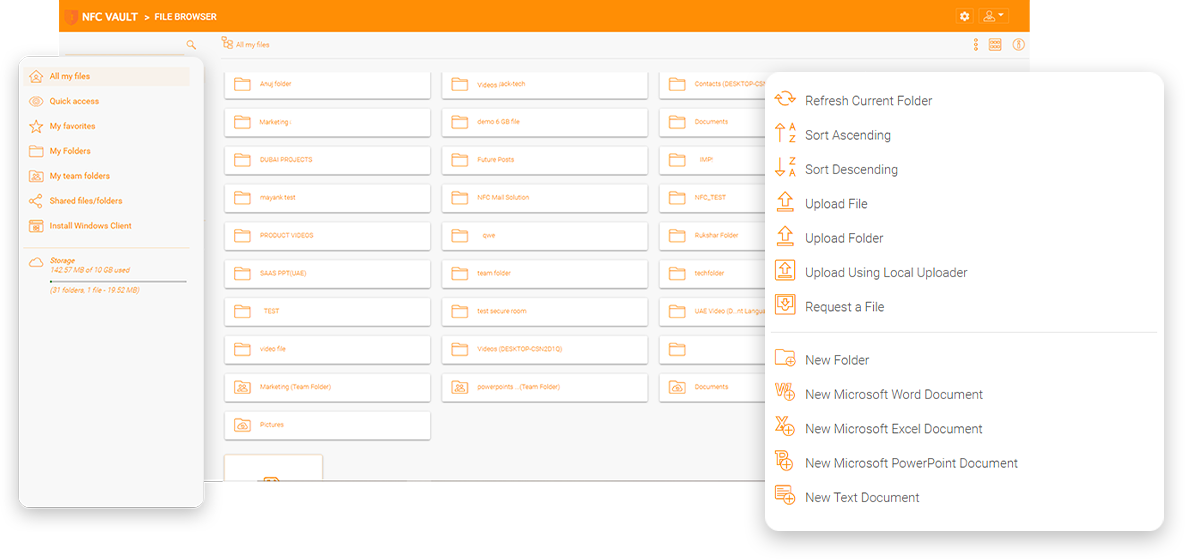
In today’s fast growth of digital landscape, businesses face significant challenges in managing remote data efficiently. The continued reliance on outdated VPN, the complexity of integrating diverse system, and the difficulties of ensuring secure and seamless access for global teams highlight the growing need for a unified remote data management platform.
Many businesses still rely on traditional VPN that create latency, complicate remote data access, and fall short of modern security requirements.
Without a unified platform, integrating on – premise, cloud, and hybrid data storage solutions becomes complex and leads to operational inefficiencies.
Providing secure and seamless file access and collaboration across global location can cause major challenge for many organizations.
Evolving cyber threats makes it increasing difficult to maintain data integrity and security during remote access and collaboration.
As business look for a unified remote data management platform, they often find that traditional tools such as VPNs, SharePoint, and standard cloud storage, that makes daily work complicated. This is why many organizations are now exploring VPN alternatives that help improve productivity, global collaboration, and seamless system integration.
Complexity, latency, and security risk makes VPNs less suitable for remote data access.
SharePoint and OneDrive struggle with integration, which can reduce operational flexibility.
Cloud sync delays and large file handling reduce productivity.
Traditional file servers are costly and hard to maintain for remote access
Drive mapping is an essential feature for online file access. It allows users to easily open and manage files and folders through the M – Drive over the internet, providing seamless access without the need for a VPN connection.
File locking is a vital feature for remote file access and team collaboration to avoid prevent conflicts when multiple user works on the same file. It allows users to control concurrent access by locking file during editing, ensuring data consistency across team.
Dropbox and google drive do not offer the same level of centralized control as a traditional file server. With NTFS permissions, organization can see who access your data and how it is used, making collaboration more secure and compliant.
Two powerful deployment options – choose the setup that fits your organization best.
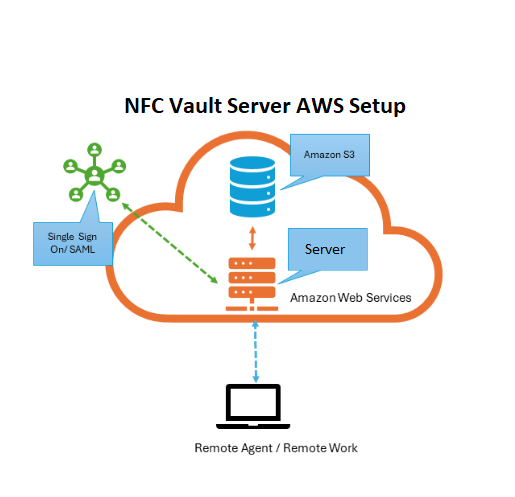
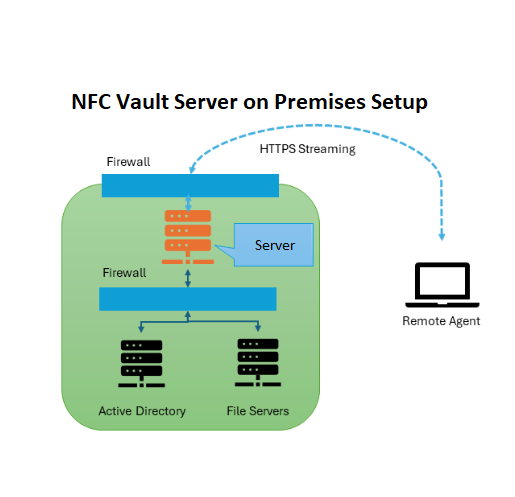
NFC vault, our Unified Remote Data Management Platform, streamlines remote data management and access for businesses by providing a secure, efficient alternative to traditional VPNs. It integrates with existing infrastructure, supports Autodesk, and enhances global collaboration without compromising security.
Integrates with your existing on-premises file servers and cloud services without the need for VPNs.
Provides HTTPS-based, secure access to files from anywhere, eliminating VPN vulnerabilities.
Improves performance with local caching for offline access and faster file retrieval.
Uses existing AD credentials for seamless access control and authentication.
Prevents data conflicts by locking files during edits, ensuring integrity in collaboration.
Enables secure file sharing across locations, enhancing team productivity globally.
Our team will get back to you shortly.